
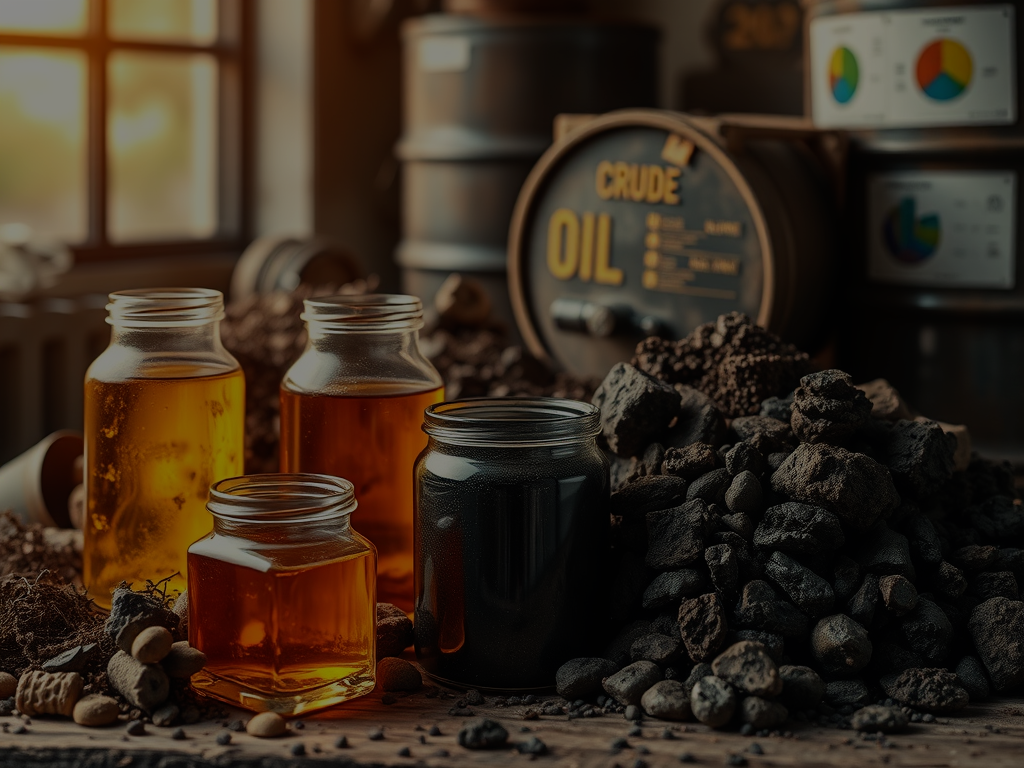
Since there’s so much in the media these days about crude oil, I thought I’d dive into learning about its different types and properties.
I’ve seen much reporting lately about various characteristics of the crude oil produced by Venezuela and other countries. References to crude being “light” and “sweet” and so forth. I wanted to learn more about what those mean, and offer some context about Venezuela’s oil industry.
Weighty Subject
One way of distinguishing between crude products is by its weight. Light oil requires less processing than heavy oil, because it is less dense and evaporates more quickly. It is also favored for refinement into gasoline. Heavy oil is more dense, and used to make asphalt and other heavy products. 1
Sweet and Sour Sauce
Another way to distinguish between crudes is by the amount of sulfur contained within it. Crudes that have less than 1% of sulfur within it are said to be “sweet;” those with between 1% and 2% sulfur content are said to be “sour,” and require additional refinement to “sweeten” them. 2
Dropping Acid
A third important way to gauge crude oil is by how corrosive it is, measured using the Total Acid Number (TAN). A more corrosive crude requires pipes and tanks manufactured to account for it. In other words, crudes with higher TANs are more expensive to refine and transport. 3
Different countries produce different types of crude, which vary in weight, sulfur content, and corrosiveness. It seems to make sense that crude oil products that are “lighter,” “sweeter,” and have lower TANs are perhaps in greater demand and require less refinement and are less expensive to transport.
Pouring it On
The ideal crude for gasoline is one that is light and sweet. Gasoline is just one product that is distilled from the oil. Denser products like asphalt and lubricants are found at the lower end of the distillation tower. Lighter products, like gasoline, is evacuated near the top end of the tower, with a range of other products in between.
For each barrel of oil, about 45% (20 of 42 U.S. gallons) is used for gasoline. 4
What type is Venezuela’s Oil?
Venezuela’s crude is notably “sour” and “heavy,” which makes it difficult and more expensive to extract. Extraction of heavier oils like these are known to be more damaging to the atmosphere than lighter types. In addition, Venezuela’s oil operations have caused significant damage to its fragile natural ecosystem. 5
Comment
The Times‘ article makes me question whether strengthening the U.S.’ position in Venezuela’s oil industry really seems all that appetizing to American oil companies. As a layperson, it seems the catbird seat is more in acquiring the oil it produces, rather than actually drilling for it. I would argue that, in the court of popular opinion, Americans generally seem more sensitive to environmental impact than perhaps the Venezuelans are. We boycott retailers with policies that run contrary to Americans’ appetites over here. American companies should want to be seen as improving conditions there, not contributing to their deterioration. Granted, remediation will take years and tons of money, but perhaps Americans will show their gratitude to companies who choose to help Venezuela at the pump.
- Andrews, K. (n.d.). Types of Crude Oil: Heavy vs Light, Sweet vs Sour, and TAN count. Kimray. Retrieved January 7, 2026, from https://kimray.com/training/types-crude-oil-heavy-vs-light-sweet-vs-sour-and-tan-count
↩︎ - Ibid.
↩︎ - Ibid.
↩︎ - Moore, J. (n.d.). How is Gasoline Made from Petroleum Oil? Kimray. Retrieved January 7, 2026, from https://kimray.com/training/how-gasoline-made-petroleum-oil
↩︎ - Friedman, L. (2026, January 5). Venezuela’s ‘Dirtiest’ Oil and the Environment: Three Things to Know. The New York Times. Retrieved January 7, 2026, from https://www.nytimes.com/2026/01/05/climate/venezuela-dirty-oil.html ↩︎
Leave a Reply